
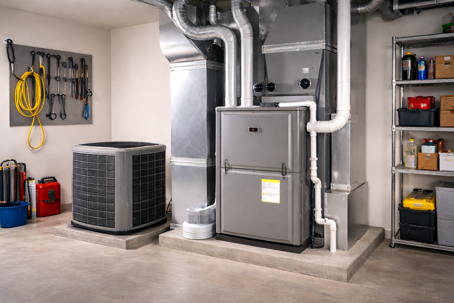
On a rare chilly Fort Myers morning, nothing feels worse than turning on your heater and getting nothing but lukewarm or cold air. The same goes for a sticky August evening when your air conditioner suddenly stops keeping up. Your first thought might be that the whole system is done for and a big repair bill is coming your way.
In Southwest Florida, most homes rely on heat pumps and central HVAC systems that work hard almost year round. That long run time in high humidity makes small issues show up as sudden “no heat” or “no cooling” problems. Many of these problems start with a few predictable trouble spots that you can safely check yourself before assuming the worst.
At Allied Air Services, we work on heat pumps and central HVAC systems across Fort Myers and nearby communities every day. Our veteran-owned team of licensed and insured technicians brings over 33 years of combined experience in this climate, so we see the same patterns over and over. In this guide, we will walk you through practical HVAC troubleshooting steps for Fort Myers homes and show you where simple checks end and a 24/7 professional visit is the smart move.
Why Fort Myers Homes See So Many HVAC Problems
Fort Myers is not a place where your HVAC system gets much of a break. Many homes use heat pumps that handle both heating in the short winter and cooling for a long, humid summer. That means the same outdoor unit is working almost all year, moving heat out of your home in the summer and into your home when temperatures finally drop.
In our climate, your system deals with a constant stream of warm, moist air. Inside, the evaporator coil pulls heat and moisture out of the air and drains the water away. Outside, the condenser coil releases heat into already hot air. Over time, this combination of high humidity and long run times leads to more condensation, more biological growth in drain lines, and faster buildup of dirt and debris on coils and filters compared to cooler, drier regions.
If you live closer to the water, salt in the air adds another stress. Salt can corrode metal parts on the outdoor unit, including the coil fins and some electrical connections. That corrosion can reduce efficiency and, eventually, cause electrical issues or refrigerant leaks. What might look like a random failure is often the final result of these slow, climate-driven changes that have been building for months or years.
We see many “sudden” breakdowns that are really the end of a long process. A filter that has not been changed often enough slowly chokes airflow until the system short cycles or shuts down. A drain line that has grown algae for months finally clogs completely and trips a safety switch. Understanding how Fort Myers conditions strain your HVAC system helps you see why regular checks and maintenance are not just nice to have. They are how you stay ahead of the problems we see every season.
Start With Simple Checks: Thermostat, Power, and Settings
When your HVAC system stops heating or cooling, start with the controls. Thermostats and power issues cause more “no heat” or “no cool” calls than most people realize. These are usually the safest checks a homeowner can make before doing anything else and often rule out simple problems quickly.
First, look at your thermostat display. Confirm that it is set to “heat” if you want warmth or “cool” if you want air conditioning. Make sure the temperature setting is several degrees above the current room temperature for heat or below it for cooling. Check the fan setting as well. “Auto” means the fan runs only when the system is actively heating or cooling, while “on” runs the fan continuously and can sometimes confuse people who feel air movement but no temperature change.
If your thermostat has batteries, a weak or dead battery can prevent it from sending a signal to your system. Replace the batteries if the display is fading, blank, or showing low battery icons. For smart thermostats, verify that they are connected and have not been switched into an away or energy-saving mode that holds the temperature higher or lower than you expect. A quick check of app schedules and modes can save a lot of guesswork.
Next, check the power feeding your system. Find your main electrical panel and look for the breaker labeled for your HVAC, air handler, or heat pump. If it is in the middle position, that usually means it has tripped. You can reset it once by turning it fully off, then back on. If it trips again, do not keep resetting it. Frequent tripping often signals a deeper electrical or mechanical issue that needs a licensed technician.
Behind the scenes, your thermostat uses low-voltage wiring to tell the air handler and outdoor unit when to start. A dead thermostat, a broken wire, or a tripped breaker interrupts that communication and the system simply will not start, even though nothing major may be wrong with the equipment itself. We often arrive at Fort Myers homes where the only real problem was a mis-set thermostat or tripped breaker. Our goal at Allied Air Services is to help you rule out these simple issues first so that if you do need us 24/7, you know you are calling for the right reasons.
Check Airflow: Filters, Vents, and Blocked Returns
If your system runs but your home still feels uncomfortable, airflow is the next place to look. Your HVAC system depends on a steady flow of air through the filter, across the coil, and out through the ducts. In Fort Myers, where systems move a lot of air for many months, filters load up faster than many people expect.
Start with your air filter. It might be in a return grille on a wall or ceiling, or inside the air handler near the bottom or side panel. Turn the system off at the thermostat, then slide the filter out carefully. If it looks gray and matted or you can barely see light through it, it is time to replace it. In our climate, many homes do best with filter changes about every 30 to 60 days, and even more often if you have pets, allergies, or lots of dust in the home.
A clogged filter starves the system of air. That can cause weak airflow at the vents, longer run times, higher energy bills, and even short cycling, where the system turns on and off frequently. Inside the air handler, low airflow can cause the coil to get too cold in cooling mode and ice up, or to overheat in heating mode. Either way, the system may shut down to protect itself, which feels like a random breakdown from the homeowner’s point of view even though the root cause is simple airflow restriction.
Next, walk your home and check supply vents and return grilles. Make sure they are open and not blocked by furniture, curtains, rugs, or boxes. Closed vents do not “save energy.” They change how the duct system behaves and can create pressure issues, noisy ducts, and rooms that are always too hot or too cold. A return grille that is blocked by a piece of furniture keeps the system from drawing enough air back, which has a similar effect to a dirty filter.
During maintenance visits and Comfort Club tune-ups, we see the same pattern in Fort Myers homes. A neglected filter and several blocked vents combine to create poor comfort and frequent complaints. By learning to spot these issues yourself, you can often restore performance quickly. When we visit, we go deeper by checking blower performance, duct condition, and coil cleanliness, but these simple airflow checks are your first line of defense.
Look for Drainage and Moisture Problems in Humid Weather
In Fort Myers humidity, your air conditioner and heat pump pull a lot of moisture out of the air. That water drips off the cold evaporator coil into a pan, then flows out through a condensate drain line. When everything is clean and clear, you never think about this hidden plumbing. When it clogs, you can suddenly lose cooling or see water where it does not belong.
Over time, warm, wet conditions inside the drain line are ideal for algae and mold growth. Dust from your home and debris from the attic or closet where the air handler sits can also find their way into the pan and line. As buildup grows, the drain slows down and can eventually block completely. Many systems in our area have a float switch in the pan. When the water level rises, the switch opens the circuit and tells the system to shut off to help prevent overflow.
From your perspective at the thermostat, the system may simply refuse to run or shut off and not come back on. You might also notice water around the air handler, staining on the ceiling below an attic unit, or a musty smell near the equipment. Outside, you might see little or no water dripping from the pipe where the drain line terminates, or you might see water backing up at that outlet.
As a homeowner, you can safely look for these signs. Check around the indoor unit for any visible water or dampness. Take a look at the drain line outlet outside to see if water is flowing when the system is running in cooling mode. If you are comfortable, you can remove a cleanout cap at the top of the drain line near the air handler and see if you notice any standing water or slime, then replace the cap. Do not disassemble the drain or try to clear it with tools unless you truly understand the setup. It is easy to damage PVC fittings or cause leaks that show up later.
Our technicians clear and treat drain lines as part of routine maintenance in Fort Myers homes because we know how often clogs lead to shutdowns and water damage. If you see water where it should not be, or your system stops working and you suspect a drain issue, contacting us quickly helps reduce the risk to ceilings, drywall, and flooring. With 24/7 availability, we can respond when you notice a problem in the evening or on a weekend, not just during business hours.
Recognize Electrical and Mechanical Warning Signs
Some HVAC symptoms go beyond basic troubleshooting and signal problems that a licensed technician should handle. Recognizing these warning signs helps you know when to stop DIY checks and protect your equipment and your safety.
Frequent breaker trips are one of the most important red flags. If your HVAC breaker trips more than once after you reset it, something in the system is drawing more current than it should or shorting intermittently. This could be a failing compressor, a worn blower motor, a damaged wire, or a weak capacitor that struggles to start the motor. Repeatedly resetting the breaker without finding the cause can overheat components and lead to more expensive repairs.
Unusual sounds are another clue. A high-pitched squeal from the indoor unit may point to blower motor or belt issues. A grinding or scraping noise often means metal parts are contacting where they should not, such as a blower wheel rubbing its housing. Outside, loud buzzing, humming, or clicking from the condenser can indicate failing contactors, capacitors, or compressor problems. These components handle high voltage and are not safe for homeowners to test or replace on their own.
Smells tell a story too. A brief dusty odor the first time you run heat in the season can be normal as dust burns off the heat strips or elements. A persistent burning or electrical smell, especially near the air handler or panel, is not normal and should be treated as an urgent sign to shut the system off and call a professional. In Fort Myers attics and closets, where temperatures can get very high, electrical connections and insulation age faster, increasing the odds of these issues.
Our team at Allied Air Services is fully licensed and insured to diagnose and repair electrical and mechanical problems safely. When we respond to calls with these kinds of symptoms, we use proper meters and tools to check voltages, amperage, and motor performance rather than guessing. We also provide thorough upfront estimates before any repair work begins, so you know what we found and what it will cost before you decide how to proceed.
When Troubleshooting Points to a Bigger HVAC Problem
Sometimes, your basic troubleshooting and our diagnostic visit reveal a pattern that points to a deeper issue. Instead of a single bad part, the system itself may be aging out, losing efficiency, or poorly matched to your Fort Myers home. Recognizing this helps you avoid putting money into a system that will continue to disappoint you.
One sign is frequent repairs over a short period. If you have had to replace capacitors, motors, or contactors multiple times in just a few years, and your system is already older, those repair costs start to add up. Another sign is persistent comfort problems. If some rooms are always too hot or too cold no matter how you set the thermostat, or if the system seems to run all day on hot or humid days without ever catching up, the root cause might be sizing, duct layout, or declining performance, not just a dirty filter.
In our climate, systems tend to reach the end of their useful life sooner than in milder areas because they simply run more hours. Coils can corrode, especially near the coast. Refrigerant leaks may develop. Older units often use less efficient technology that struggles to remove both heat and humidity effectively. You might notice that your energy bills have crept up year over year even though your habits have not changed much.
At a certain point, continuing to repair an older, inefficient system costs more than planning a replacement. When we evaluate your system, we look at its age, history of repairs, current performance, and how it matches the size and layout of your home. If replacement makes more sense than another repair, we will explain why in clear terms and answer your questions so you can make an informed choice.
As certified dealers of Trane and Ameristar, we can recommend modern, energy-efficient systems that fit the specific needs of Fort Myers homes. We also offer convenient payment plans and financing options, along with current specials and strong manufacturer warranties, to make upgrading more manageable. Our aim is to help you move from recurring breakdowns and high bills to a system that delivers steady comfort in our demanding climate.
Prevent Future Breakdowns With Regular Maintenance
Every troubleshooting step in this guide has a common thread behind it. Filters clog slowly, drain lines grow algae over time, electrical connections loosen with heat and vibration, and coils gather dust and salt from the air. Regular maintenance is how you stay ahead of these slow changes before they turn into middle-of-the-night breakdowns.
During a professional maintenance visit, a technician does far more than glance at your filter. We clean and inspect the indoor and outdoor coils, check refrigerant pressures within safe limits, test electrical connections and components, measure temperature differences across the coil, and clear and treat condensate drain lines. In Fort Myers, where your system runs so many hours, these steps go a long way toward keeping performance steady and catching small issues early.
For example, a partially clogged drain line might not shut your system off yet, but a trained eye can spot slow flow and buildup and clear it before the next big summer storm. A slightly noisy blower motor might still be running, but an amperage reading that is higher than normal can indicate that it is working too hard and should be addressed before it fails completely. These are the kinds of details that homeowners usually cannot see from the thermostat alone, but they make a big difference in how long your equipment lasts.
We created our Comfort Club maintenance program around the way Fort Myers systems actually operate. Member visits are scheduled at intervals that make sense for our climate, not a generic national guideline. During these visits, our technicians follow a detailed checklist that focuses on the real failure points we see here, such as drain lines, coils, and electrical components exposed to heat and humidity.
Joining a maintenance program is not just about smoother operation. It reduces surprise breakdowns, helps your system run more efficiently, and extends the useful life of your equipment under tough conditions. As we build an ongoing relationship with you and your home, we also get to know your system’s history, which helps us make better recommendations when it is time to repair or start thinking about replacement.
Need Help Now? How Allied Air Services Responds
After you have checked your thermostat, power, filters, vents, and looked for obvious drainage or warning signs, you will have a clearer picture of what is happening. If your system still refuses to run, shows electrical or mechanical red flags, or you simply do not feel comfortable going further, that is the point where a licensed technician should take over.
When you call Allied Air Services, you are connecting with a veteran-owned, locally rooted HVAC company that serves Fort Myers and surrounding communities around the clock. Our 24/7 availability means that if your heat stops on a cold morning or your air conditioning fails on a muggy evening, you do not have to wait until the next business day. We arrive with the tools and training to diagnose the problem, not just guess at the most common part to replace.
During a typical visit, we start by asking about the symptoms you have seen and what you have already checked. Then we test your system, inspect components, and pinpoint the root cause. Once we know what is wrong, we explain our findings in clear terms and provide a thorough upfront estimate. That way, you understand what work is needed and what it will cost before you decide how to move forward.
If your system needs ongoing care, we can talk with you about our Comfort Club maintenance program. If we find that your equipment is nearing the end of its practical life, we can discuss replacement options from Trane or Ameristar and review financing choices that fit your budget. Through every step, we focus on reliability, transparent communication, and long-term comfort for your home.
If your Fort Myers HVAC system is giving you trouble and you are ready for a licensed, insured team you can trust, contact Allied Air Services today.
Call (239) 893-7560 now for 24/7 HVAC service in Fort Myers.